

Premature birth, breastfeeding, and maintaining breast milk
Having a baby prematurely is a unique, different, and often more stressful birth.
For the parents, an intense period is expected, with more challenges compared to parents of a baby born at term.
The road to establishing breastfeeding is also longer. Some mothers are unable to establish breastfeeding during their stay in the hospital. But there are many directions for action before the release., and many premature babies can breastfeed successfully and for a long time.
Thoughts on premature breastfeeding among parents and staff
Premature birth can be very overwhelming, scary, stressful, and even a little disappointing (a birth that is a little different than you imagined), and some mothers will take some time to recover and start functioning.
A premature baby sometimes appears very small and delicate, and the feeling among parents and medical staff is that he cannot breastfeed effectively.
Sometimes they believe it is worth feeding him well so that he will grow and get stronger and wait to continue breastfeeding. In cases of very premature birth, there are medical conditions that require treatment and nutrition in other ways.
Breastfeeding is often postponed until a later stage, but it is important to know that healthy premature babies born in relatively late weeks can breastfeed partially/fully, with professional guidance and support.
Breast milk for premature babies
Breast milk is the best nutrition for a premature baby, and the closest to what it would have received as a fetus in the womb at this time. Therefore, this is an amazing opportunity for the mother to provide this to her baby, preferably as early as possible.
Breast milk production is a natural process of the body that begins from week 16 of pregnancy and continues immediately after birth.
In a premature birth, the colostrum phase (the initial fluid) may appear for several days before the milk arrives. Colostrum is extremely important and arrives in small quantities. With precise work, with an emphasis on regular pumping, the milk will arrive and its quantity will increase.
Since the small premature baby initially needs very small amounts, the mother's milk will usually be adequate for him.
Breast milk from premature babies has unique ingredients that are remarkably tailored to the needs of the premature baby. More calories, proteins, fats, enzymes, vitamins, minerals, and a unique amino acid profile that aids in digestion and absorption of nutrients.
In some cases, at the request of the premature baby, a substance called a "human milk fortifier" will be added to the breast milk to enrich the milk with the minerals and energy required for a very small premature baby.
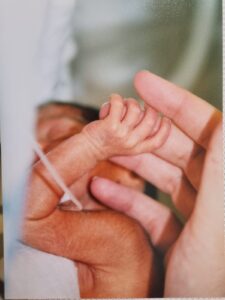
First steps after a premature birth
- Understand what the current nutritional options are for your baby.
- Start acting early. It is advisable to breastfeed/express and pump in the first hours after birth, and certainly within the first day.
- If the baby can breastfeed, it is recommended to receive good guidance and consider pumping additionally until you know that the baby is effective at breastfeeding.
- If the baby is not breastfeeding, it is important to start expressing milk in an orderly manner even if the baby is not eating yet.
- Organize pump parts for the hospital and home.
So how do you do it??
In the first day, there are small amounts of milk called colostrum. This is the first milk, rich and especially adapted for newborn babies. It is important to note that it comes in small amounts from every mother.
Manual expression may sometimes be less pleasant, but the action is important and effective. It is worth learning the action ahead of time if you know you will give birth early, or immediately after birth, with the help of lactation consultants or nurses.
In the case of a premature birth, it is recommended to start pumping as early as possible, but it is important to take into account that collecting colostrum is expected to be easier by hand expression during the first hours and even the first day.
If there is difficulty with manual expression, you can work with pumping only, even if not much is coming out yet, and the main thing is to start signaling to the body as soon as possible that it needs to produce milk.
Combining pumping and expressing is a good tool for removing milk, especially at first and whenever it is needed.
And of course, make sure to pass every drop that comes out to the baby. Consult your midwife regarding a container in which to store the milk.
There are cases where the baby cannot eat in the first few hours or even days. Therefore, it is very important that the mother begins to express milk. Only then will the body know that it needs to produce and increase the amount.
It is recommended that the pump parts be cleaned and disinfected before each pumping. Especially important for pumping intended for storage. If this is not possible, you can skip sterilizing before pumping milk intended for immediate use and then sterilizing at least once a day. It is important to wash your hands thoroughly and ensure a clean environment. Detailed instructions will be given at the hospital, and it is always advisable to clarify the instructions and follow them.
National Breast Milk Bank Guidelines for Pumping:
mdais.org/blood-donation/breast-milk-bank
It is recommended to pump at least 8 times a day, or more as needed (for example, if there is breast congestion, if the mother needs to increase the amount of milk).
It is recommended to receive organized training on how to pump, and to become familiar with the pump and its parts in the hospital. Sometimes, it is necessary to adjust the size of the funnels in order to pump effectively (funnel/flange, the part that connects to the breast).
I should mention that in Israel there is a breast milk bank donated by mothers who pump. The milk is monitored throughout, and is given to premature babies who were born with very low birth weight and in situations where the mother does not have enough milk.
Towards the mother's discharge homeIt is recommended to have a high-quality hospital-level multiple user pump. Hospital-level pumps can be rented from private places (information online) or a high-quality double-sided pump can be purchased from health insurance companies/private places.
And what about breastfeeding? ?
If the baby is healthy and can start breastfeeding, it is highly recommended to start experimenting with breastfeeding while still premature. In most cases, premature babies in good health will be able to synchronize breathing, swallowing, and sucking. In other words, breastfeeding makes it easier for babies to perform all the necessary actions while eating with relative success compared to other feeding methods.
It is recommended to experiment with breastfeeding in relaxed conditions, while you are relatively calm, without tiring the baby with many procedures before attempting breastfeeding.
In the neonatal unit, you can ask to weigh the baby before and after breastfeeding on some occasions. It is important to look at the baby and see how he is doing, what good swallowing looks like, and thus gain confidence while still in the neonatal unit, if possible.
It is recommended that the baby be given plenty of opportunities for skin-to-skin contact in the nursery and at home. Skin-to-skin contact can greatly promote the health of the baby and mother, and will also help with milk production and breastfeeding success. If there are other family members who are allowed to enter the nursery and have skin-to-skin contact, of course this is welcome.
In some cases, a baby will partially breastfeed in the neonatal unit, and sometimes there will be occasional breastfeeding in the neonatal unit and breastfeeding will be established at home.
Achieving full breastfeeding with a premature baby may take longer and require more monitoring and professional guidance, but it is certainly possible.
Even if the baby is not mature and strong enough to breastfeed fully, the opportunity, experience, and proximity to the breast are extremely important.
And of course, it is important to maintain breast milk by pumping throughout the period when the baby is not yet fully breastfed and/or the milk is unbalanced (the mother has more than the baby needs or less).
Sometimes, premature babies will breastfeed and receive breast milk/other supplements, depending on their ability. Sometimes they will breastfeed longer than a baby born at term. Supplemental breast milk/other supplements can be given to babies in different ways, and it is recommended to consult with your doctor about this.
The transition to breastfeeding may take days or even weeks, depending on the week of birth and the baby's condition. Desire, patience, training, and professional guidance are required. And as mentioned, preserving the milk!
It is very important to seek professional guidance from a lactation consultant during hospitalization and after discharge home. Professional guidance is very helpful in assessing the baby's abilities, and in building a plan to establish successful breastfeeding at an appropriate and safe pace for mother and baby.
You can find lactation consultants in your area on the Israeli Association of Nursing Professions website. https://ialp.org.il/ As well as in the community and health funds.
***During your entire stay in the hospital, it is important to follow the instructions of the neonatal team, who are familiar with the baby's needs and abilities***
Article author: Ariella Levy, IBCLC certified lactation consultant and organizational sociologist, owner of a private clinic in Tel Mond.
Mother of three children who were born prematurely, she accompanies mothers of premature babies and teaches and lectures in the field among women in the field in Israel and around the world.


